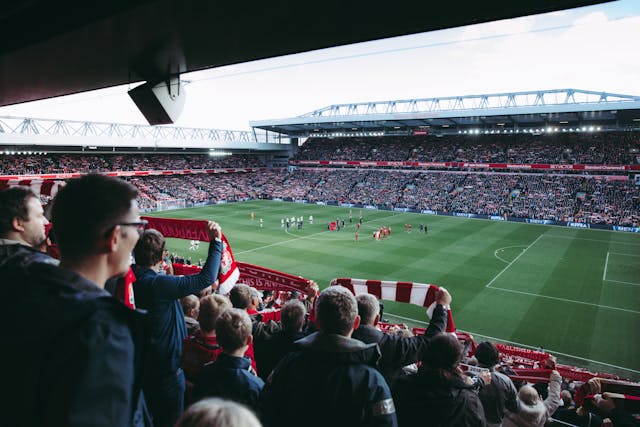
How FIFA World Cup Host Nations Are Selected?
July 15, 2026 12:11 pm
Table of Contents
- A Brief History of How the World Cup Host Selection Process Has Changed
- The Confederation Rotation Principle
- Step One: FIFA Sets the Requirements
- Step Two: Saying You're Interested
- Step Three: Preparing the Bid
- Step Four: Bid Evaluation
- Step Five: FIFA Council Shortlisting
- Step Six: The FIFA Congress Decision
- Why Do Some Bids Face Criticism?
- Looking Ahead
- Final Thoughts
Every four years, one soccer tournament grabs the attention of billions of people. Long before the soccer ball is kicked, a different competition happens- the race to host the FIFA World Cup.
Choosing a host country is a process that takes many years. It involves politics as well as checking if the country has the proper infrastructure of buildings and roads.
Then all 211 FIFA member countries vote on which country should host.
Understanding how this process works helps explain why some countries get to host the FIFA World Cup and why others drop out of the race. The hosting nation might also tilt the results due to home advantage. If you are a football betting fan, try online football betting at Dafabet.
We will also cover why the system looks so different now compared to ten years ago.

A Brief History of How the World Cup Host Selection Process Has Changed
For most of the World Cup's history, a small group of FIFA Executive Committee members decided who would host the tournament behind closed doors. That all changed in 2015. A big corruption investigation found that there was bribery and vote-selling when Russia and Qatar were chosen to host the 2018 and 2022 tournaments. This scandal made FIFA completely change how it is run. Since then, when it came to choosing the host of the 2026 World Cup, FIFA let all its members vote. This means every country that is part of FIFA, not a few top executives, gets to decide. If there is one country bidding, the decision is made by acclamation. FIFA also introduced new rules for bidding, and reports are published to show how each country is evaluated. They also created a way to score each bid. These changes were meant to make the process more open and fair. Some people still argue that politics play a role.The Confederation Rotation Principle
One of the important principles that guides how hosts are selected is the idea of confederation rotation. The FIFA organisation is made up of six groups: UEFA which's for Europe; CONMEBOL, which is for South America, CONCACAF, which is for North and Central America and the Caribbean CAF, which is for Africa; AFC, which is for Asia; and OFC, which is for Oceania. To make sure that hosting opportunities are spread out around the world and that the same winners do not keep winning, FIFA usually does not let a confederation that hosted a tournament recently, bid for the tournament. This is what happened when Qatar from the AFC hosted in 2022. After that, Asian countries were not allowed to bid for the 2026 tournament, which was given to Canada, Mexico and the United States from the CONCACAF. Then, for the 2034 tournament, CONCACAF, CONMEBOL and CAF were not allowed to bid. Only the AFC and OFC could bid. This made it easy for Saudi Arabia, from the AFC, to win the bid. The confederation rotation principle is not a written rule, but it really affects which countries can host a tournament.Step One: FIFA Sets the Requirements
The FIFA World Cup bidding process starts with FIFA's administration and Council setting the rules. This includes:- Which confederations can bid for a World Cup
- The minimum standards for stadiums, hotels, transport and telecommunications
- Commitments on rights, labour, and taking care of the environment
- The timeline for bidding and key deadlines
Step Two: Saying You're Interested
After FIFA announces the rules, countries that want to bid tell FIFA they are interested. They have a time, just a few weeks, to say they want to bid. At this point, a country can bid on its own or with neighbouring countries. It's becoming more common for countries to bid together. For example, the 2026 World Cup will be hosted by three countries. The 2030 World Cup will also be hosted by three countries, across two continents. FIFA provides countries a template agreement that outlines what they must agree to if they're chosen. If a country decides not to bid or doesn't meet the requirements, they drop out.Step Three: Preparing the Bid
Countries that are still interested then prepare a detailed plan called a "bid book". This plan includes:- Stadium plans
- Host cities
- How places there are for visitors to stay
- Transport networks
- Security plans
- Strategy
- Commitments to sustainability
Step Four: Bid Evaluation
This is the part of the whole process. The people who work at FIFA, along with experts, look at each bid very carefully. They use a scoring system that checks five main areas of each bid.- Infrastructure. This includes stadiums, training sites, airports, hotels and how people will get around
- Aspects. This is about how much money the tournament will make, who will sponsor it and how tickets will be sold
- Event vision and hosting concept. This is about how the tournament will actually happen and what it will be like
- Sustainability and human rights. This is about how the tournament will affect the environment and how it will treat people
- General organisational and legal considerations